
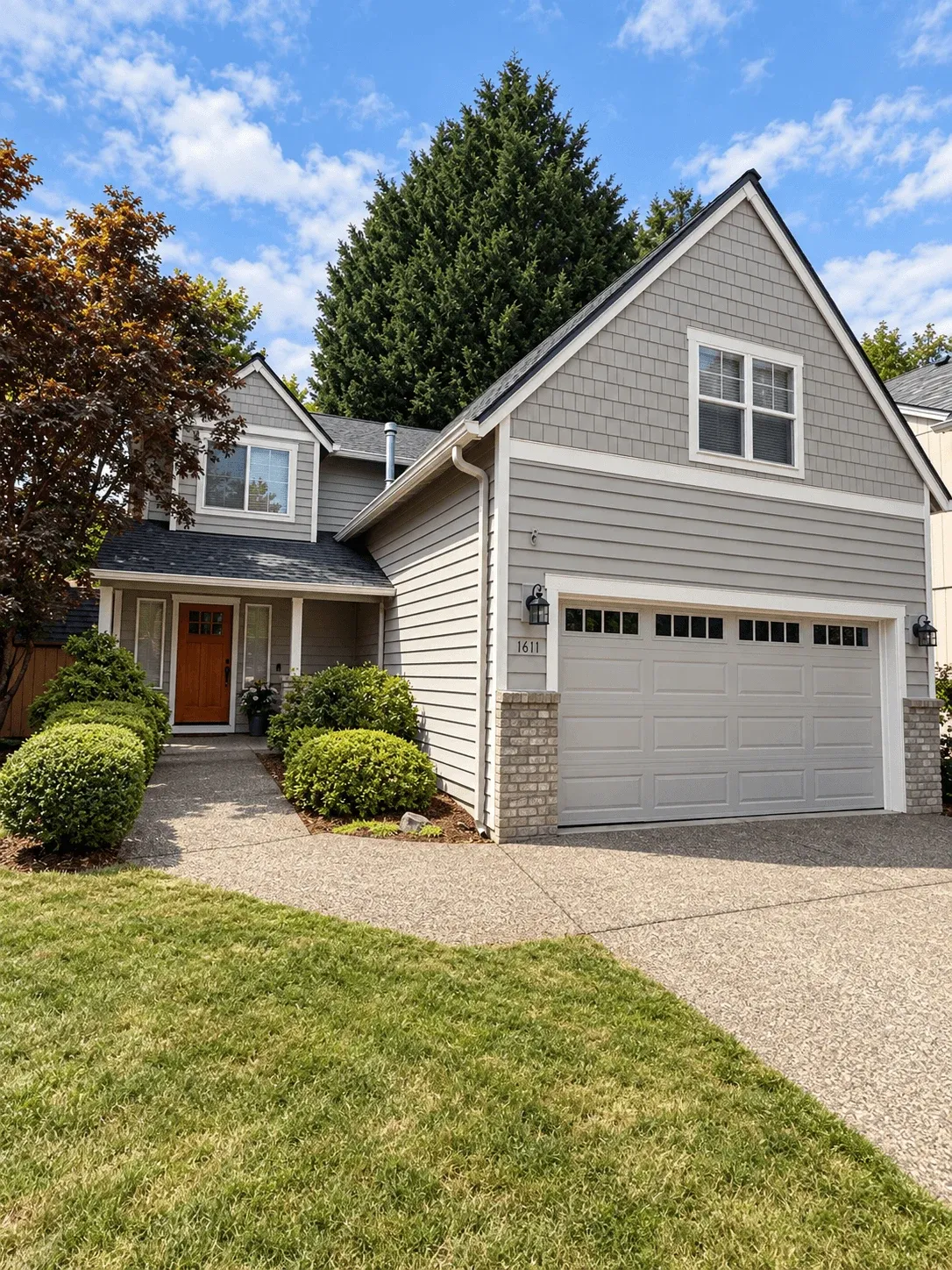
Cedar Siding Repair & Installation in Portland, OR
Cedar is the siding a lot of Portland's older homes were built with, and it's still the material many homeowners want to keep. It has warm grain, takes stain well, and suits Craftsman, mid-century, and Northwest contemporary houses better than any substitute. But cedar siding in Portland lives with long wet seasons, shaded walls, and moss. When the finish fails or water gets behind a board, rot follows.
Cedar & Stone repairs and replaces cedar siding with the details that keep it dry. We start with an exterior review, find what's causing the damage, and give you a written scope. Sometimes that's a handful of boards and new flashing at one window. Sometimes it's one elevation. A full re-side is the recommendation only when the wall needs it. One licensed Oregon contractor, CCB #248200, handles the siding, the trim, and the transitions to your windows, stone, and deck.
Cedar siding that fits the rest of your exterior
A cedar wall is only as good as the details around it. The boards depend on the weather barrier behind them, the flashing at every window and door, the clearance above the roof and the deck, and the trim that frames each corner. Most of the cedar siding damage we see in Portland starts at one of those points, not in the middle of a wall.
That's why Cedar & Stone treats cedar siding as part of the whole exterior. When we repair or re-side a cedar wall, we look at how it meets your replacement windows, where it lands against exterior stone at the foundation or entry, and how it clears the ledger of a deck. If you're planning any of those projects, we'll show you how to sequence the work so nothing gets opened up twice.
The goal is cedar siding that looks like it was always meant to be there: repaired boards that match, new sections that tie in cleanly, and a finish plan that keeps the wood protected for years.
What our cedar siding service includes
Cedar siding repair and board replacement
Dry rot repair behind cedar
Partial re-sides and profile matching
New cedar siding and cedar shingles
Signs your cedar siding needs attention
Cedar weathers in ways that look alarming but aren't, and fails in ways that are easy to miss. These are the signs that tell us a wall needs more than a cleaning:
Soft or crumbling wood at the bottom courses. The lowest boards sit closest to splash-back, soil, and roof runoff. If a screwdriver sinks into the wood, water has been getting in for a while.
Cupping, splitting, or boards pulling away. Cedar that cups or splits has usually been wetted and dried on one face for years, often because the back side was never sealed. Boards that pull away from the wall can point to failed fasteners or a swelling substrate.
Black streaks below nails. Cedar's natural tannins react with plain steel fasteners and leave dark stains that run down the wall. The streaks are cosmetic at first, but they show the fasteners are corroding.
Peeling finish and bare gray wood on sunny walls. Gray weathering alone isn't rot. But when the stain has worn off south and west elevations, the wood is taking water with every storm.
Moss, mildew, and dark staining on shaded walls. North walls and walls under Portland's tree canopy stay damp. Persistent growth keeps the wood wet and shortens its life.
Staining or rot under windows and at trim. Water that gets past a window's flashing runs down behind the siding. Staining below a sill corner is one of the most common signs we find.
Woodpecker or insect damage. Holes in cedar can be a sign of insects in the wall behind it. We check the substrate, not just the boards.
Repair, restore, or re-side: how we scope cedar work
Most cedar siding in Portland doesn't need to be torn off. The right scope depends on how much of the wood is sound, what caused the damage, and how long you plan to keep the house.
Targeted cedar siding repair. If the damage is limited to a few boards, one corner, or the area below a window, a targeted repair is usually the right call. We replace the damaged boards, fix the flashing or clearance problem that let water in, and finish the new wood to blend with the old.
Restoration. When most of the boards are sound but the finish has failed across the house, restoration can add years of life. We replace the boards that can't be saved and clean the rest. Then we refinish the wall while the wood is dry. It costs far less than a re-side and keeps the original character of the house.
One elevation or section. Weather in Portland isn't even. The south and west walls take the sun and the driving rain, and north walls stay damp. When one side has failed and the others haven't, we re-side that side and tie it in at the corners.
Full cedar re-side. When rot is widespread, the sheathing is failing, or the siding has been patched so many times it no longer sheds water, a full re-side is the better investment. It's also the time to correct the weather barrier, flashing, and trim details across the whole house.
We put the recommendation in writing with the reasons behind it. If a smaller repair will hold, we'll tell you.
Cedar siding profiles we work with
Portland's housing stock has almost every cedar profile, sometimes on the same house. Matching the existing profile is the first job in any cedar siding repair, and choosing the right profile matters for a new wall or addition.
Bevel and lap siding. The classic tapered board on Craftsman and older Portland homes. Exposure, thickness, and texture vary from house to house, so we match all three when we repair or extend it.
Channel and shiplap siding. Overlapping boards with a shadow line, common on mid-century homes and contemporary remodels. It can run horizontally or vertically.
Tongue-and-groove siding. A tight, smooth surface that suits modern and Northwest contemporary designs, often used as an accent at entries and gables.
Board-and-batten. Wide vertical boards with narrow battens over the joints. It works on farmhouse and modern homes and on accent walls.
Cedar shingles and shakes. Shingles are sawn for a uniform look; shakes are split or heavily textured for a rougher, more rustic face. Both are common in gables and on cottage-style homes across Portland, and both need careful flashing at every course transition.
If your existing profile isn't available anymore, we'll show you options to mill a match or to design the new section as an intentional change at a natural break, like a gable or a belly band.
Installation details that keep cedar siding dry
Cedar has natural oils that help it resist decay and insects, but that only protects the wood itself. Whether cedar siding in Portland lasts depends on how it's installed. These are the details we plan into every cedar wall:
A real weather barrier. The siding is the first layer, not the last. Behind it, a continuous weather-resistive barrier, lapped and taped at every seam and opening, catches the water that gets past the boards.
Drainage space where the wall needs it. On exposed elevations and on new walls, a rainscreen or furred gap behind the cedar lets water drain and both faces of the wood dry. That's one of the best defenses against cupping and rot in a wet climate.
Back-primed boards and sealed cuts. Every face of the board gets a finish, including the back and every end cut made on site. Unsealed end grain is where water gets into cedar first.
Corrosion-resistant fasteners. We use stainless or hot-dipped galvanized nails so the fasteners don't react with the cedar's tannins and streak the wall.
Flashing at every opening and transition. Head flashing over windows and doors, kickout flashing where a roof meets a wall, and flashing at belly bands and course changes. Most cedar failures we repair trace back to a missing piece here.
Clearance from roofs, decks, and soil. We keep the bottom of the siding clear of grade, roof surfaces, and deck boards so it isn't sitting in splash-back or standing water.
Caring for cedar siding in Portland's climate
Cedar is not a no-maintenance siding, and we'd rather tell you that at the consultation than have you find out years later. The wood resists decay on its own, but the finish is what keeps water out. In Portland's rain and UV cycle, a penetrating stain or clear finish usually needs renewing every few years, sooner on south and west walls that take the most sun.
A simple routine goes a long way. Rinse the siding once a year to clear dirt and pollen. Keep gutters clean and downspouts directed away from the wall. Trim shrubs and branches back so the siding can dry. Walk the house after the wet season and look for peeling finish, open joints, and staining under windows. Catching a failed caulk joint or a soft board early keeps a cedar siding repair small.
When we finish a repair or re-side, we tell you what finish went on, when it's likely to need attention, and which walls to watch. When it's time to refinish, we can handle the stain or sealer for you. If you'd rather not keep up with refinishing at all, we'll also tell you honestly whether a lower-maintenance material makes more sense for part or all of the house.
Cedar or fiber cement: choosing for your home
Many Portland homeowners weigh cedar against fiber cement, and both are good choices on the right house. The decision usually comes down to the look you want, how much upkeep you're willing to take on, and what's already on the house.
Cedar is the right fit when the architecture calls for real wood, when you want a stained or natural finish, or when you're repairing a cedar house and want the new work to match. It's light, easy to detail around custom trim, and repairable board by board. It asks for a regular finish schedule in return.
Fiber cement is the right fit when lower maintenance matters more than natural grain, or when a painted finish suits the house. It holds paint well and doesn't need restaining.
Some homes use both: cedar shingles in the gables or cedar at the entry, with fiber cement on the main walls. We'll help you plan the transitions so the mix looks intentional from the street.
Why choose Cedar & Stone for cedar siding
Repair first, re-side when it's needed
Details planned for Portland weather
One contractor for the whole exterior
Recent exterior projects
See how Cedar & Stone plans siding, trim, and transitions on Portland-area homes. Each project starts with an exterior review and a written scope.
Our cedar siding process
Consultation
Exterior review
Scope and material direction
Repair or installation and walkthrough
What affects the cost of cedar siding in Portland
We price every cedar siding project in Portland from the written scope, not a per-square-foot chart. These are the factors that move the cost most:
Scope of the work. Replacing a few boards costs a fraction of re-siding one wall, and one wall costs a fraction of the whole house. That's why we scope the repair before we talk about replacement.
Hidden damage. Rot in the sheathing, trim, or framing behind the siding adds work. We can't always see it until a wall is open, so the scope explains how we'll handle anything we find.
Profile and grade. Clear, knot-free cedar costs more than knotty grades, and custom or discontinued profiles can need milling to match.
Finish. Factory-primed or prefinished boards, site-applied stain, and the number of coats all affect cost and future upkeep.
Weather barrier and drainage. Adding a rainscreen gap or replacing the weather barrier adds cost now and adds years to the siding.
Height and access. Second-story walls, gables, and steep sites need more staging and time.
Trim and transitions. New corner boards, window trim, and belly bands, and the transitions to windows, stone, or a deck, are part of the scope.
We'll walk you through each line of the scope so you know what you're paying for and why.
Cedar siding across the Portland area
Cedar & Stone repairs and installs cedar siding across the Portland area. In Portland, that often means matching bevel siding and shingles on older Craftsman homes. In Lake Oswego and Beaverton, it's often mid-century and contemporary homes with channel or tongue-and-groove cedar. We also work in Tigard, Milwaukie, Oregon City, and Gresham, where tree cover and wet winters are hard on cedar walls.
Not sure whether we serve your neighborhood? See all areas we serve or call (971) 459-4168.
Cedar siding FAQs
Is cedar siding a good choice for Portland's climate?
Can you repair cedar siding instead of replacing it?
Can you match my existing cedar siding?
How often does cedar siding need to be stained or sealed in Portland?
What's the difference between cedar shingles and cedar shakes?
What causes black streaks on cedar siding?
Is gray cedar siding rotten?
Should I choose cedar or fiber cement siding?
How much does cedar siding cost in Portland?
Is Cedar & Stone licensed to work on siding in Oregon?
Ready to talk about cedar siding for your Portland home?
Tell us what you're seeing on your walls. We'll review the exterior, find what's causing the damage, and give you a written scope for cedar siding repair or replacement that fits the house.
